



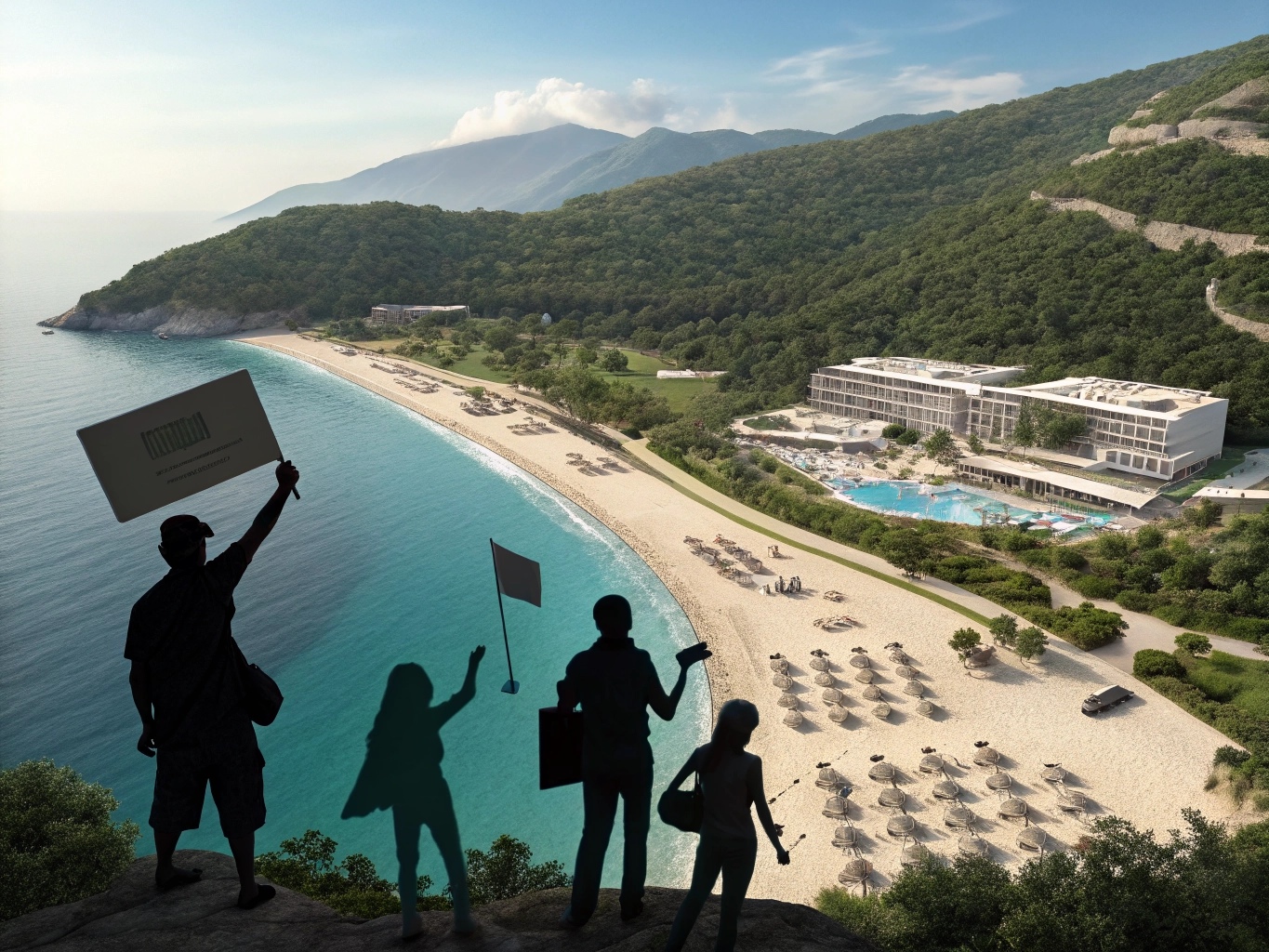
Albanian authorities are investigating forged land deeds at the heart of Jared Kushner’s controversial resort project — just as street protests against it boil over.
The project, which has attracted both investment and criticism, is situated on a stunning part of the Albanian coastline that has immense potential for tourism. However, the recent allegations of forged deeds are casting a long shadow over its future. Many locals fear that the project could lead to environmental degradation and loss of public access to beaches, which are vital for both residents and visitors alike.
Prosecutors from Albania’s elite anticorruption agency, SPAK, are examining whether official documents for a prime stretch of protected coastline were falsified before being sold to the company behind the Kushner-backed luxury development. The investigation into these forged deeds has raised serious concerns about the integrity of the transaction.
As the inquiry unfolds, many are calling for greater transparency and accountability in real estate transactions in Albania. The implications of such fraudulent practices extend beyond just this one case; they raise questions about the broader regulatory framework that governs land sales in the country. If the allegations are proven true, it could lead to significant changes in how land transactions are overseen, potentially setting a precedent for future developments.
Understanding the Implications of Forged Deeds
Forged deeds are not just a legal issue; they also represent a deep-seated trust problem between the government, developers, and the public. The ongoing protests highlight the discontent among citizens, who feel that their voices are being disregarded in favour of foreign investments. Residents demand to be part of the conversation surrounding developments that will affect their lives, making it crucial for the authorities to engage with them in meaningful ways.
The explosive claims, revealed in case files reviewed by Reuters, have thrown yet another legal shadow over a project already sparking months of public outrage.
This situation is a reflection of broader concerns regarding governance in Albania. The country has been working hard to improve its international image and attract foreign investment, but incidents like this bring attention to systemic issues that need to be addressed. Transparency and integrity must be at the forefront of any development efforts if Albania is to secure its place as an emerging destination for tourism and investment.
In conclusion, the ongoing investigation into forged deeds related to Jared Kushner’s Albanian resort project exemplifies the complex interplay between development, legality, and ethics in emerging markets. The response from authorities and the public will be critical in determining the future of not only this specific project but the regulatory environment surrounding real estate transactions in Albania. As stakeholders navigate this scandal, it is crucial to uphold principles of transparency and integrity, ensuring that the growth of the tourism sector benefits all parties involved.
The investigation into the forged deeds could also have repercussions for Kushner’s business operations in the region. Investors are likely to be wary of entering into deals without guarantees of legitimacy and ethical practices. As the world watches closely, the outcome of this case may influence not just the future of the resort project but also the overall attractiveness of Albania as a destination for foreign investments.
In addition, this situation highlights the importance of due diligence in real estate transactions, especially in regions where regulations might be less stringent. Investors must ensure that all necessary checks are performed to avoid liability and potential losses arising from fraudulent activities. The case of the Kushner resort serves as a cautionary tale for those considering investments in similar projects across the globe.
As discussions about development in Albania continue, it’s essential to balance economic growth with ethical considerations. The local community should be engaged in the planning process, and their concerns must be addressed to prevent backlash and unrest. Sustainable development practices can lead to better outcomes for both investors and locals, ensuring that the benefits of projects like the Kushner resort are shared equitably.
Moving forward, the government must bolster its efforts to combat corruption and enhance the legal framework surrounding land ownership and transactions. By doing so, they can help rebuild trust among the populace and create a more inviting environment for potential investors. A clear commitment to fairness and integrity in business dealings will be crucial in shaping the future landscape of development in Albania.
Ultimately, the investigation into these forged deeds is about more than just one project; it speaks to the heart of what it means to conduct business responsibly in a developing country. Stakeholders from all sides must come together to ensure that the lessons learned from this scandal pave the way for a more transparent and accountable future, where investments contribute positively to the local economy without compromising ethical standards.
As the situation evolves, it will be important for observers and participants alike to monitor the developments closely. The outcome of this case could not only set the tone for the Kushner resort but could also resonate across the broader landscape of real estate development in Albania, impacting policies, practices, and investor confidence. The resolution of these allegations of forged deeds could be a turning point for the nation.
The broader implications of the forged deeds scandal extend beyond the immediate legal ramifications, impacting international perceptions of Albania as a stable investment destination. Stakeholders must prioritize ethical practices and community engagement to foster a sustainable and prosperous future.
Forged deeds remain a significant concern in real estate, and as this case unfolds, it serves as a reminder of the importance of vigilance, accountability, and integrity in all business dealings.
Forged deeds must be addressed critically, ensuring that the lessons learned from this scandal promote positive change and bolster the reputation of Albania as a viable destination for foreign investments.
Ultimately, the resolution of the forged deeds scandal will play a pivotal role in shaping the future landscape of development in Albania, influencing regulatory practices and the overall climate for investment.
Forged deeds will likely remain a focal point in discussions surrounding the nexus of real estate and ethical governance, making it imperative for all stakeholders to advocate for reform and integrity in the industry.
The continuing saga surrounding forged deeds serves as a crucial reminder of the need for vigilance, transparency, and community involvement in real estate developments, ensuring that all voices are heard in the process.